Passer au contenu principal

High-strength carbon reinforcement materials engineered for lightweight structural performance, conductivity, and durability in advanced industrial applications.

Carbon fibers are high-performance materials known for their exceptional strength-to-weight ratio, offering up to five times the strength of steel while remaining significantly lighter. These fibers provide excellent mechanical strength, wear resistance, chemical stability, and fatigue resistance, making them valuable reinforcement additives in polymers, coatings, and composite systems.

Carbon fibers also offer high temperature resistance, low thermal expansion, and potential electrical or thermal conductivity, depending on the precursor material used in manufacturing.

Carbon Fiber

Carbon fibers are manufactured by spinning a polymer precursor material into fibers and then thermally treating the fibers at high temperatures to develop a graphite-like carbon structure. This heat treatment aligns the carbon molecular structure along the fiber axis, producing extremely strong covalent bonds that give carbon fibers their high tensile strength and stiffness.

Common precursor materials used to manufacture carbon fibers include Polyacrylonitrile (PAN), Oxidized PAN, and Petroleum Pitch. Asbury supplies carbon fibers in several forms including Chopped Carbon Fibers and Milled Carbon Fibers. These materials are used as reinforcement additives in coatings, composites, polymers, and engineered materials.

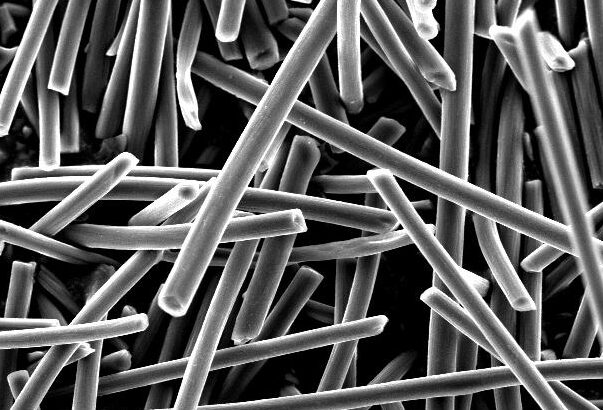
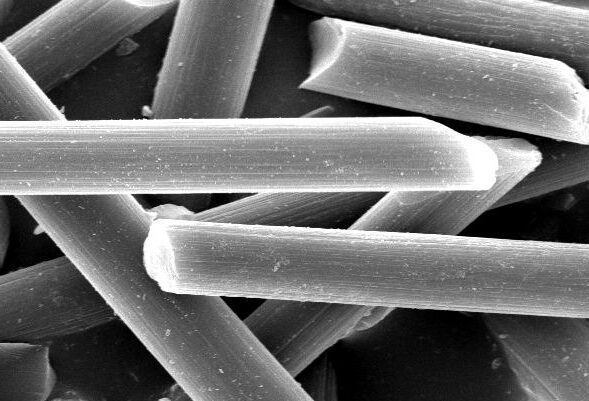
Scanning electron microscope image of a sample showing numerous cylindrical structures, with a scale bar indicating 50 micrometers for size reference.
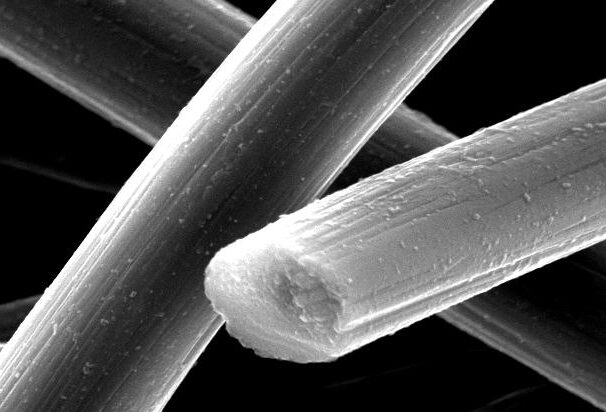
Scanning electron microscope image showing a close-up view of elongated, rod-shaped bacterial structures, with a scale bar indicating a size of 10 micrometers.

Propriétés

Major Carbon Fiber Properties

Carbon fibers offer a unique combination of mechanical strength and functional performance.

  • Very high strength-to-weight ratio
  • High tensile strength and modulus
  • Excellent wear and fatigue resistance
  • Low thermal expansion
  • High temperature tolerance
  • Chemical resistance
  • Electrical and thermal conductivity (depending on precursor)
  • Low density compared to metals
Scanning electron microscope image showing close-up of cylindrical fibers, with a scale bar indicating a measurement of 5 micrometers, highlighting their fine structure and surface details.

Applications

Carbon Fiber Applications

Carbon fibers are used in demanding industrial applications where lightweight strength and performance are required.

Coatings, Paint & Polish

Improves durability, wear resistance, and electrostatic dissipation in specialty coatings.

Produits de friction

Enhances wear resistance, mechanical strength, and thermal stability in friction materials.

Plastics & Polymers

Provides reinforcement and conductivity in polymer compounds and composite materials.

Fonctionnement

Carbon Fiber Precursors

The performance characteristics of carbon fibers depend largely on the precursor material used in manufacturing.

  • Oxidized PAN fibers are often used where thermal stability and oxidation resistance are important.
  • PAN-based fibers are the most widely used and provide excellent mechanical strength and durability.
  • Pitch-based fibers offer higher thermal and electrical conductivity and are commonly used in specialized applications requiring thermal management or electrical performance.

Fiber Forms

Carbon fibers are commonly supplied in chopped or milled forms for use as additives in coatings, composites, and polymer compounds.

  • Chopped fibers provide structural reinforcement and improved mechanical performance.
  • Milled fibers offer shorter fiber lengths that disperse more easily in coatings, polymers, and specialty compounds.

Fiber Sizing Options

Chopped carbon fibers may include surface treatments or sizing to improve compatibility with specific resin systems.

Common sizing options include:

  • Epoxy sizing – compatible with epoxy-based systems
  • Polyurethane sizing – suitable for many thermoplastic and thermoset resins
  • Hydrophilic sizing – designed for water-dispersed systems
  • High-temperature sizing – optimized for elevated temperature applications
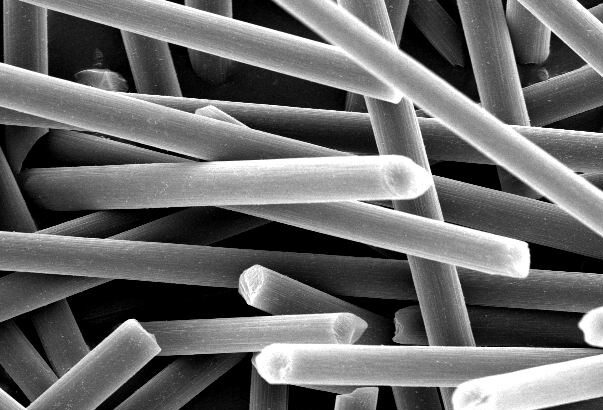
Microscopic image of bacterial cells, showcasing a dense arrangement of rod-shaped bacteria. Scale bar indicates a size of 20 micrometers, highlighting the intricate details of microbial structures.

POURQUOI CHOISIR ASBURY

Your Global Supply Partner of Carbon Fiber Materials

Asbury Advanced Materials supplies chopped and milled carbon fibers derived from PAN, oxidized PAN, and pitch precursors to support coatings, polymer reinforcement, friction materials, and advanced industrial applications.

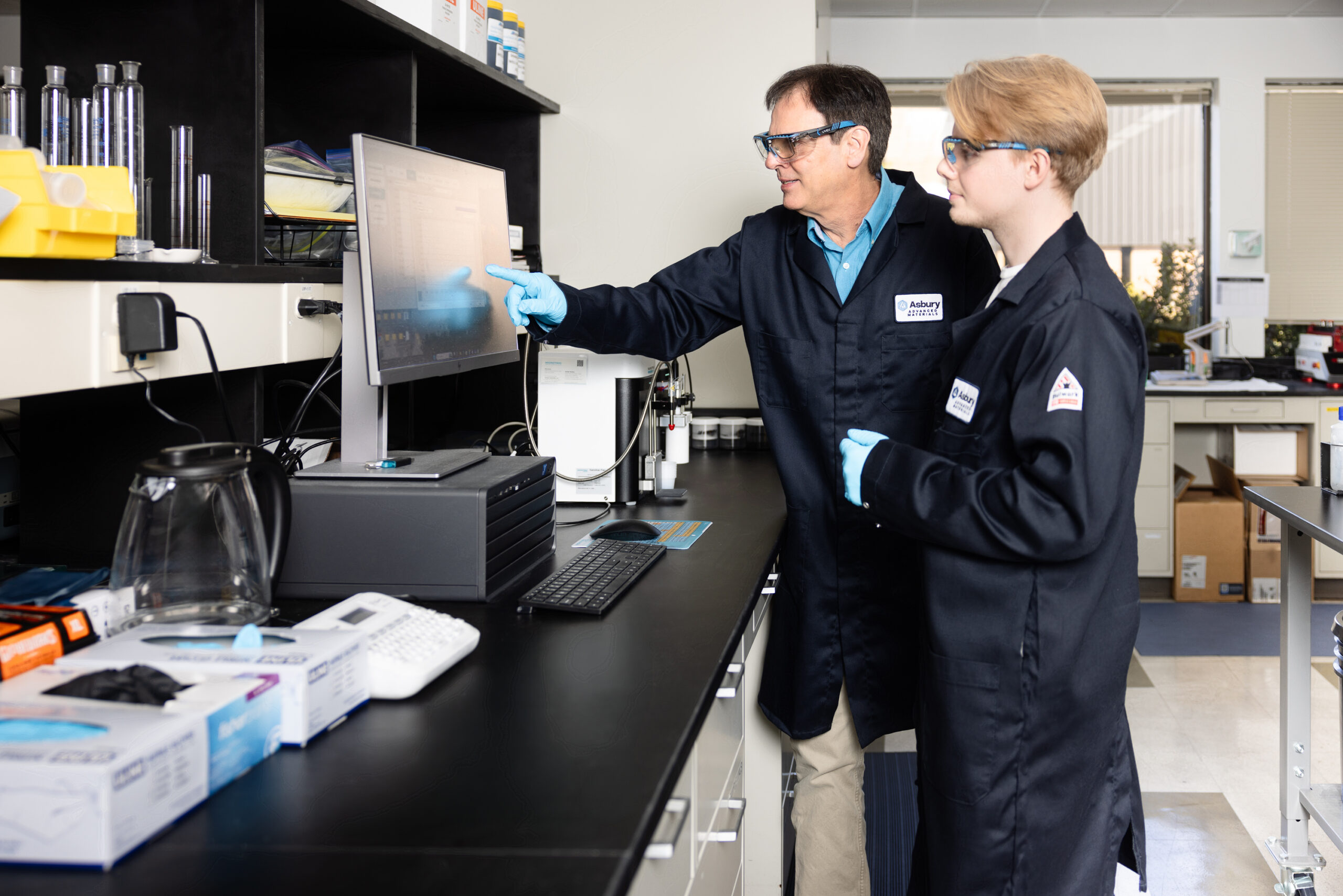
Deux spécialistes en blouse et gants de laboratoire collaborant devant un ordinateur dans un environnement de laboratoire. L'un pointe l'écran tandis que l'autre observe, entourés d'équipements et de consommables de laboratoire. L'environnement met en avant l'accent mis sur la recherche scientifique et la formation.

Des décennies d'expertise des matériaux

Une solide expertise dans le domaine du carbone, du graphite et des matériaux spécialisés, au service d'applications concrètes et complexes.

Savoir-faire technique et capacités de fabrication

Des équipes expertes qui maîtrisent le comportement des matériaux, les exigences de transformation et les contraintes applicatives.

Régularité, qualité et contrôle

Des matériaux fiables, traités pour répondre à des spécifications rigoureuses, lot après lot.

Présence mondiale et fiabilité d'approvisionnement

Un réseau d'approvisionnement et de distribution diversifié, structuré pour accompagner les clients partout où ils opèrent.

Haut de page