Zum Hauptinhalt springen

Highly porous carbon materials engineered for adsorption, filtration, and purification applications.

Activated carbon is widely used to remove organic and inorganic compounds from gas streams, liquid systems, and industrial wastewater. Its extremely high surface area and porous structure allows it to effectively adsorb contaminants, remove color, and purify process streams.

Activated carbon is commonly used for water treatment, air purification, industrial filtration, and decolorization where efficient contaminant removal is required.

Activated Carbon

Activated carbon is a form of carbon processed to create a highly porous internal structure that significantly increases surface area. These pores trap and hold impurities through adsorption, making activated carbon an effective material for purification and filtration applications. Asbury offers activated carbon in several forms including Granular Activated Carbon (GAC) and Powdered Activated Carbon (PAC).

Activated carbon is typically produced from carbon-rich materials such as:

Bituminous Coal
(mesoporous structure)

Coconut Shell
(microporous structure)

Wood
(macroporous structure)

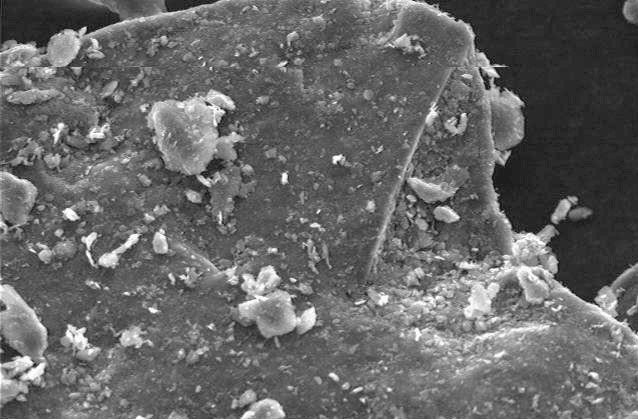
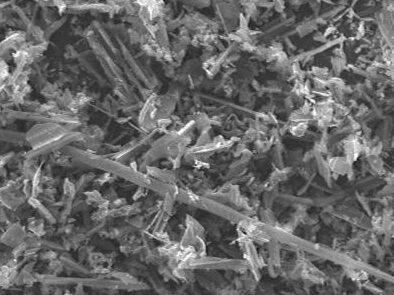
Scanning electron microscope image showing detailed textures of mineral particles, highlighting their irregular shapes and surface features at a magnification of 50x.
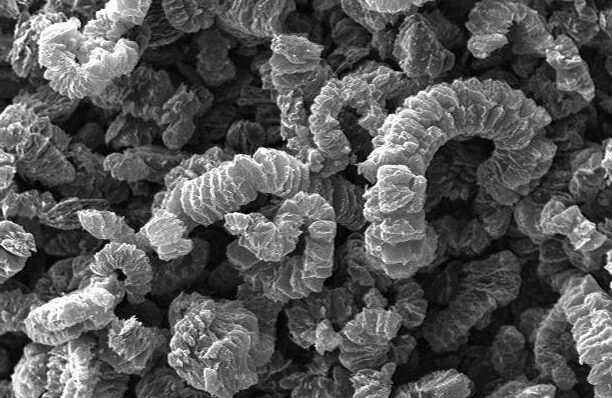
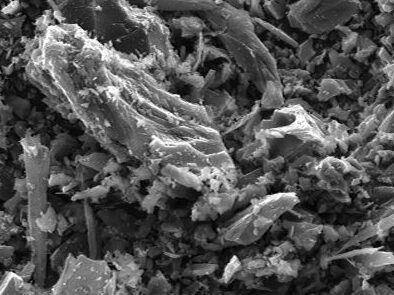
Microscopic image of mineral particles displaying various crystalline structures, captured at 250x magnification. The image highlights the intricate details and textures of the sample, useful for geological and material science studies.

Eigenschaften

Wesentliche Kohlenstoffeigenschaften

Activated carbon materials provide excellent adsorption performance due to their porous structure.

  • Extremely high internal surface area
  • Controlled pore size distribution
  • High adsorption capacity
  • Chemische Beständigkeit
  • Good mechanical hardness
  • Available in multiple particle sizes and forms
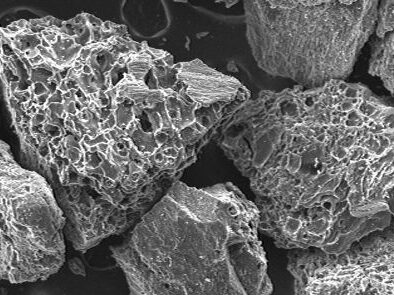
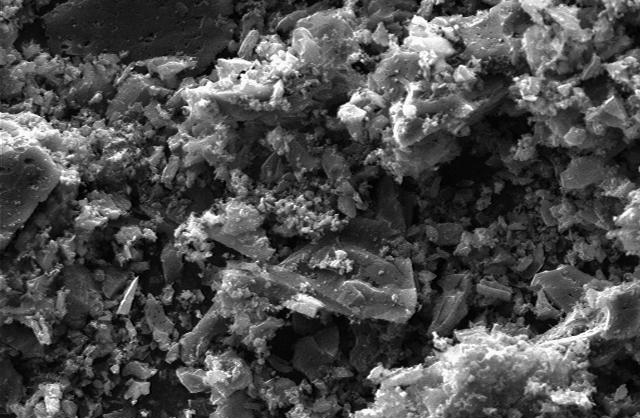
Scanning electron microscope image showing a close-up view of mineral particles and fragments, highlighting their intricate textures and structures at a magnification of 250x.

Anwendungen

Activated Carbon Applications

Activated carbon is used across many industries where purification and contaminant removal are required. It is widely used as gas and liquid stream adsorbents for organic and inorganic substances or to remove toxic agents from wastewater and process effluent gas.

Beschichtungen

An excellent decolorizer that can remove even the toughest organic dyes.

Funktionsweise

Adsorption Mechanism

Activated carbon removes contaminants through adsorption, a process in which molecules adhere to the surface of the carbon material. The extensive network of micropores, mesopores, and macropores provides a large surface area that allows activated carbon to capture a wide variety of organic and inorganic compounds.

Pore Structure

The effectiveness of activated carbon depends largely on its pore size distribution:

  • Micropores (<1 nm) are effective for trapping smaller molecules and are common in coconut shell carbons.
  • Mesopores (1–25 nm) are typically found in coal-based carbons and are widely used for liquid-phase filtration such as water treatment and color removal.
  • Macropores (>25 nm) are commonly associated with wood-based carbons and help adsorb larger organic molecules.

Activation Process

Close-up view of a granular material under a microscope, showcasing intricate textures and structures. The image highlights the details of the surface morphology, useful for studies in materials science and nanotechnology.

Activated carbon is produced through controlled oxidation processes that create the material’s porous structure.

Steam Activation (Thermal Activation)

The raw material is heated to temperatures between 800–1000°C in the presence of steam or oxidizing gases to develop the internal pore structure.

Chemical Activation

The raw material is heated at 400–600°C in the presence of chemical activating agents such as phosphoric acid, which promotes pore development at lower temperatures.

WARUM ASBURY

Your Global Supply Partner of Activated Carbon Materials

Asbury Advanced Materials offers activated carbon materials derived from coal, coconut shell, and wood in powdered, granular, and pelletized forms to support water treatment, air purification, and industrial filtration applications.

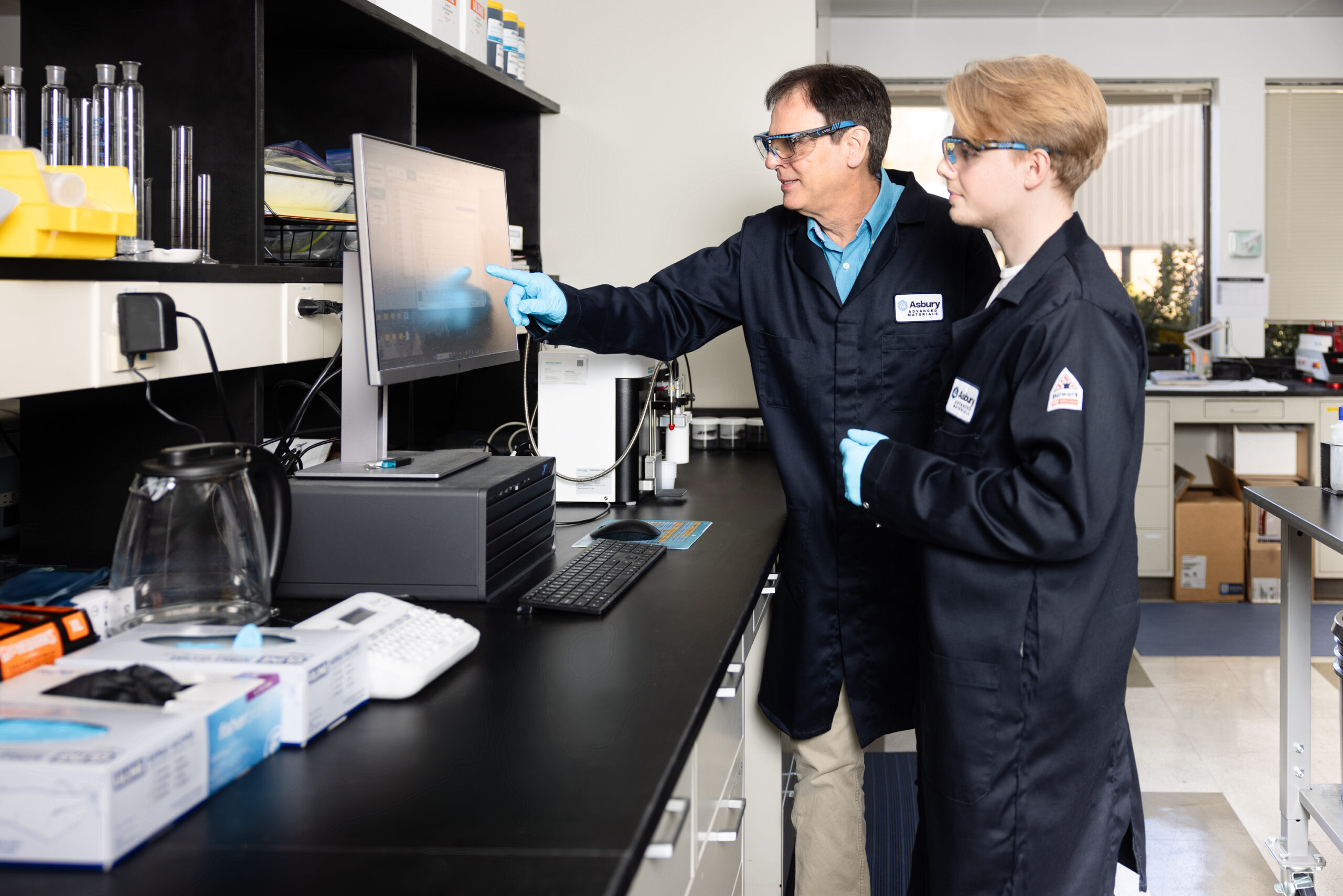
Zwei Fachkräfte in Laborkitteln und Handschuhen bei der gemeinsamen Arbeit am Computer im Labor. Eine Person deutet auf den Bildschirm, während die andere beobachtet – umgeben von Laborausstattung und Verbrauchsmaterialien. Die Szene unterstreicht den Fokus auf wissenschaftliche Forschung und Ausbildung.

Jahrzehntelange Werkstoff-Expertise

Fundierte Erfahrung mit Kohlenstoff, Graphit und Spezialwerkstoffen – zur Unterstützung anspruchsvoller, praxisnaher Anwendungen.

Technische Tiefe & Fertigungskompetenz

Kompetente Teams, die das Materialverhalten, die Verarbeitungsanforderungen und anwendungsspezifische Randbedingungen verstehen.

Konsistenz, Qualität & Kontrolle

Zuverlässige Werkstoffe, verarbeitet nach anspruchsvollen Spezifikationen – Charge für Charge.

Globale Reichweite & Liefersicherheit

Ein diversifiziertes Beschaffungs- und Vertriebsnetzwerk zur weltweiten Unterstützung unserer Kunden.

Nach oben