Synthetic Graphite
Manufactured from other types of carbon, this material is suitable for use in many applications.
Read More

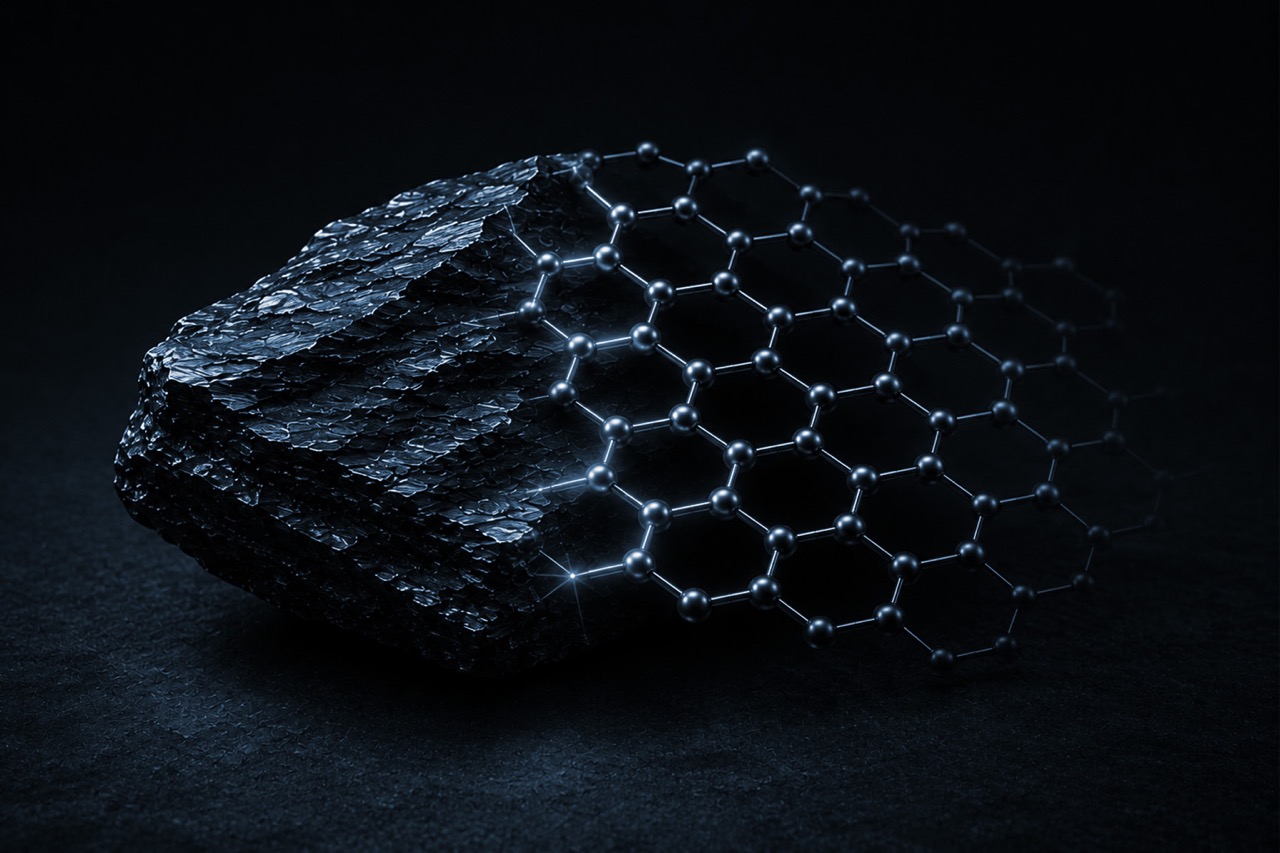
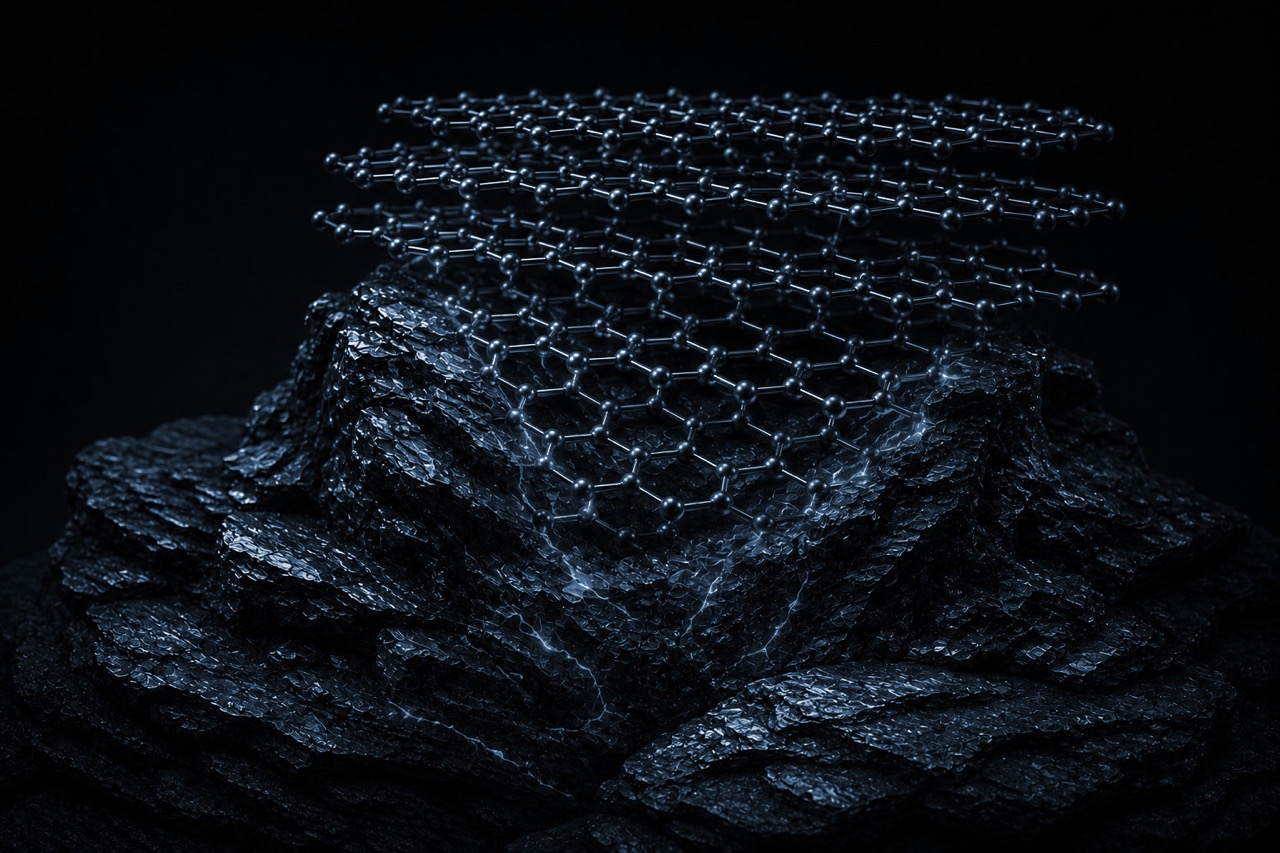
Synthetic graphite, or artificial graphite, is a manufactured form of crystalline carbon produced by the high-temperature transformation of carefully selected carbon precursors. Unlike natural graphite, which forms geologically over millions of years, synthetic graphite is created through controlled industrial processes that rearrange amorphous carbon into a highly ordered graphite crystal lattice. The result is a high-purity, highly conductive material used in demanding metallurgical, energy, and advanced manufacturing applications.
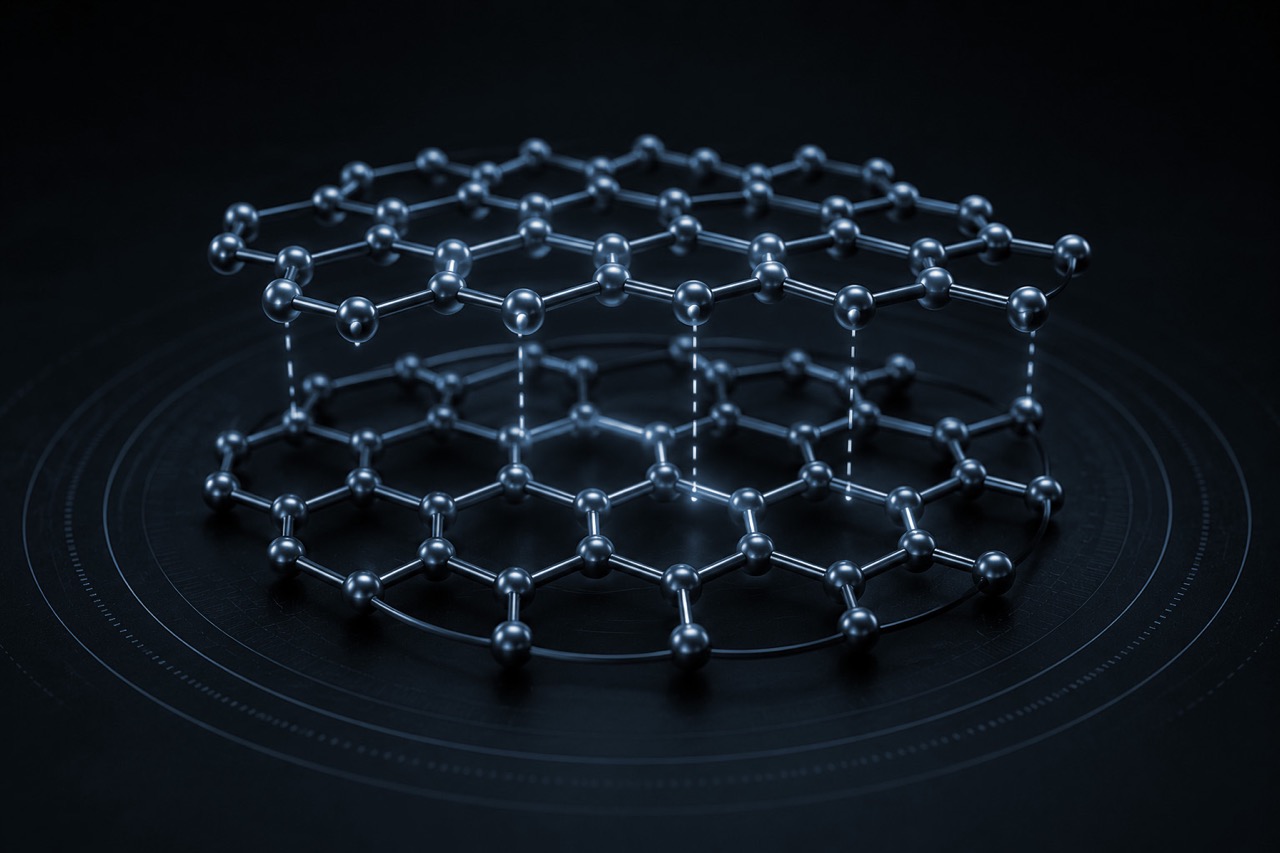
Synthetic graphite is produced by heating graphitizable carbon materials, most commonly calcined petroleum coke, to extremely high temperatures, typically between 2300°C and 3000°C. At these temperatures, carbon atoms gain sufficient mobility to reorganize into the hexagonal graphene-layer structure characteristic of graphite.
Not all carbon materials can be graphitized. Only “soft” carbons that pass through a fluid mesophase state during thermal processing can rearrange into a graphite lattice. “Hard” carbons, which lack this internal mobility due to heavy cross-linking or pinned molecular structures, cannot readily form crystalline graphite.
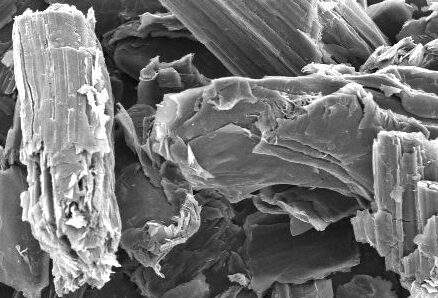
During graphitization, the material does not melt or undergo gross reshaping. Instead, atomic rearrangement occurs on a microscopic level. A piece of calcined petroleum coke that begins as an irregular, acicular grain will retain that macro-morphology after graphitization. The transformation from amorphous carbon to graphite occurs internally through atomic reorganization, not through macroscopic reshaping.
Properties
Synthetic graphite offers controlled composition and performance advantages due to its engineered origin.
Applications
Synthetic graphite is used in applications where uniformity, purity, and high conductivity are critical.
Provides high conductivity and purity for brushes, contacts, and carbon components.

Improves heat tolerance, release performance, and process consistency in molten-metal environments.
Enables efficient current transfer with strong chemical and corrosion resistance in electrochemical energy systems. Provides high electrical conductivity, structural stability, and thermal performance in advanced energy storage technologies.
How It Works
Graphitizable precursor carbons pass through a liquid-crystalline intermediate phase known as mesophase during thermal processing. In this phase, basic structural units (BSUs) composed of aromatic sp² carbon domains form and begin to align into layered, discotic liquid crystal structures.
Some precursor carbons enter graphitization in a more ordered state than others. For example, needle coke exhibits highly anisotropic, acicular (needle-like) macro-morphology and well-developed pre-graphitic layer alignment. In these materials, significant two-dimensional (A-axis) ordering already exists prior to final graphitization. The final high-temperature treatment primarily completes indexing of graphene layers along the C-axis.
Other precursor carbons are more isotropic and contain less well-developed layer alignment. Although these materials can still graphitize, the resulting graphite domains may be smaller or less highly developed compared to those derived from highly anisotropic needle coke.
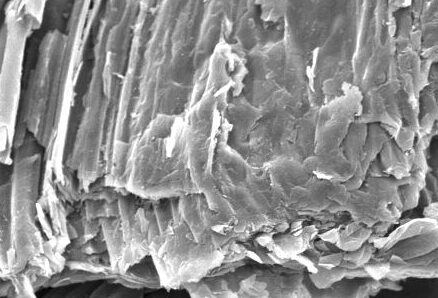
The gross (macro) morphology of synthetic graphite reflects the morphology of its precursor carbon. Because graphitization occurs at the atomic level without melting or plastic flow, the external particle shape remains largely unchanged. Pre-graphitic carbons may exhibit:
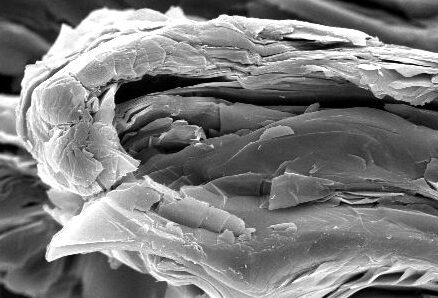
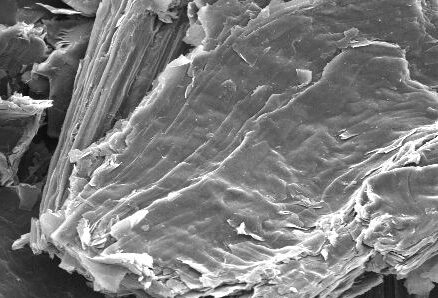
After graphitization, these macro-morphological features remain visible. However, at higher magnification, the layered structure inherent to graphite becomes apparent.
On a microscopic scale, graphitization produces stacked graphene layers characteristic of crystalline graphite. Crystal faces are rarely visible macroscopically but can be identified through polarized light microscopy or X-ray diffraction techniques.
Regardless of the precursor morphology, all synthetic graphite is composed of stacked graphene layers. Due to the anisotropic bonding within graphite (strong covalent bonding within planes and weak bonding between planes) the material inherently tends toward layered, flake-like morphology as particle size decreases.
At coarse particle sizes, synthetic graphite may appear acicular or granular. However, when ground to fine powders (e.g., 10–20 micrometers or smaller), the resulting particles exhibit distinct flake morphology. At this scale, finely ground synthetic graphite can be difficult to distinguish morphologically from natural flake graphite. Although the manufacturing origins differ, the fundamental crystal structure of both materials is the same hexagonal graphite lattice.
Synthetic graphite production typically follows these core steps:
The final product may be supplied as powders, granular materials, or fully formed carbon and graphite components.
WHY ASBURY
Asbury Advanced Materials supplies synthetic graphite products in powder, granular, and formed configurations engineered to meet the performance requirements of metallurgical, energy storage, electrical, and advanced industrial applications.
Deep experience across carbon, graphite, and specialty materials—supporting complex, real-world applications.
Knowledgeable teams who understand material behavior, processing requirements, and application constraints.
Reliable materials processed to meet demanding specifications, batch after batch.
A diversified sourcing and distribution network designed to support customers wherever they operate.
Resources

Get Started
When Performance Matters, Material Selection Matters.
Trust the materials experts to supply the right graphite, carbon materials, cokes & coals, coatings, and advanced solutions for your application.