About Natural Flake Graphite
An overview of flake graphite, including its familiar uses, natural formation, platy structure, mining and processing methods, purity considerations, and commercial size grades.
Read More

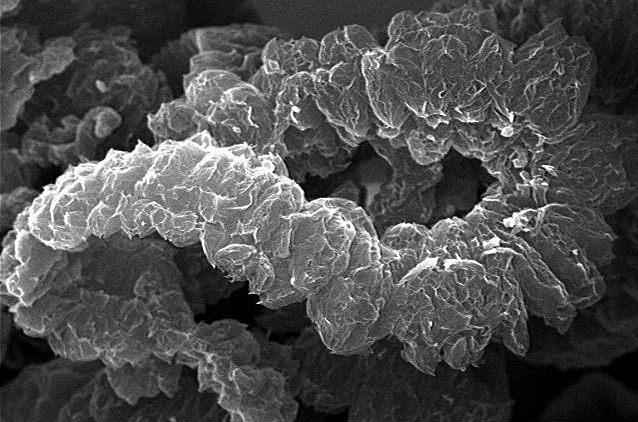
Expandable flake graphite is a graphite intercalation compound (GIC) that is chemically intercalated form of natural flake graphite designed to exfoliate and expand rapidly when exposed to heat. It is also known as intumescent graphite or expandable graphite. This unique expansion behavior dramatically increases surface area and volume, making expandable graphite a critical material in fire retardancy, sealing, and high-performance industrial systems.
Expandable flake graphite is produced by inserting (intercalating) chemical species between the graphene layers of highly crystalline natural flake graphite. This process alters both the physical and chemical properties of the graphite, imparting the ability to expand, often by hundreds of times its original volume, when exposed to elevated temperatures.
The most common and commercially important expandable graphite is bisulfate-intercalated graphite, sometimes referred to as graphite bisulfate. This material is manufactured using sulfuric acid and controlled oxidizing agents that enable stable intercalation without destroying the flake structure.
Properties
Expandable flake graphite combines the inherent benefits of natural graphite with heat-activated expansion behavior.
Applications
Expandable flake graphite is widely used in applications that require sealing performance, mechanical flexibility, and fire retardance.
When heat is applied to the material, the graphite expands and swells to create a protective layer on the surface, slowing the spread of the fire within insulation and foam materials.

Can be used in coatings designed to extend material exposure time to extreme heat resulting from fire, for example, insulative protection of structural I-beams.
Expands rapidly when exposed to heat, forming an insulating char layer that slows heat transfer and flame propagation. Used in building and construction to seal through-wall pipe raceways, preventing the movement of gases between protected spaces during a fire.
How It Works
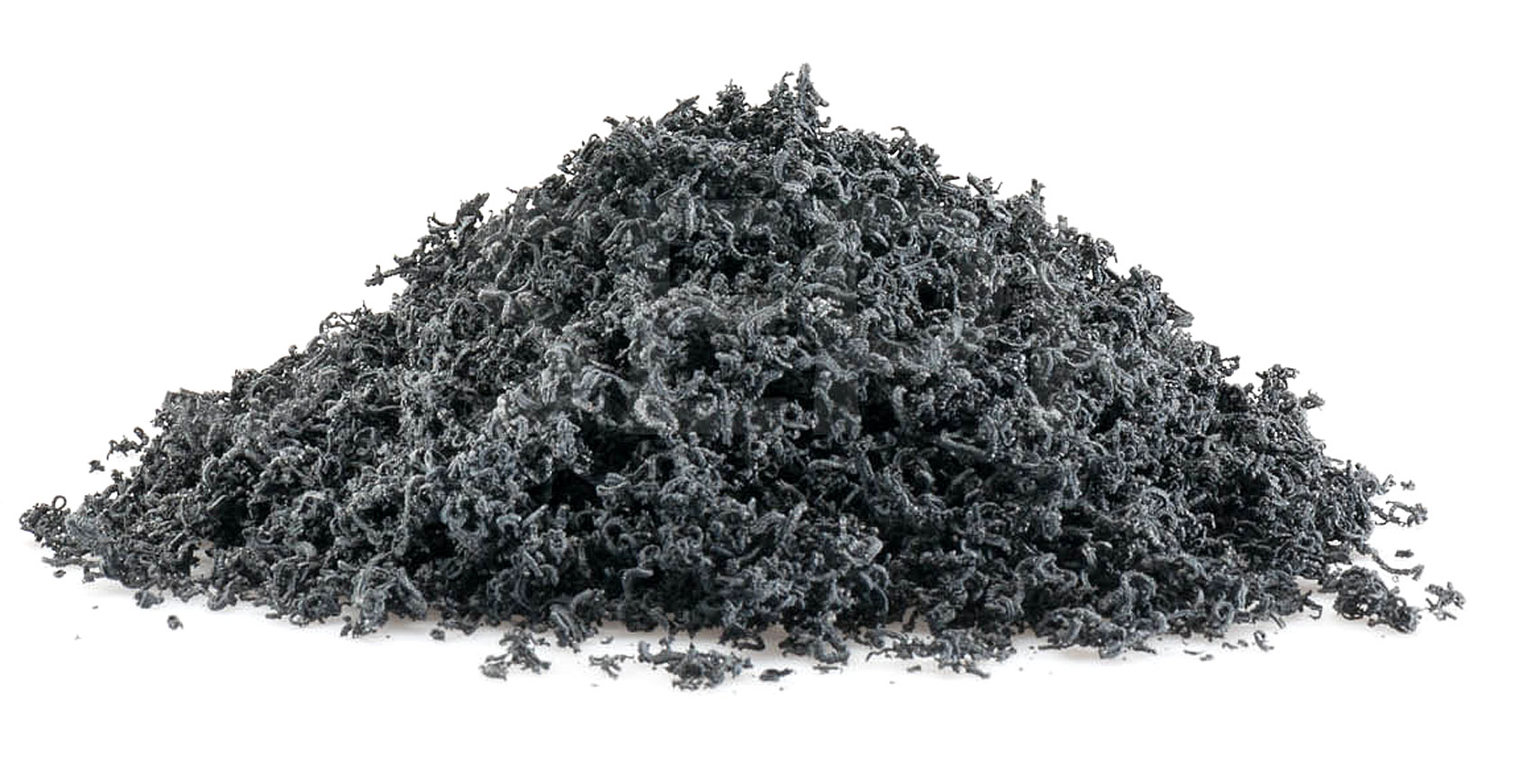
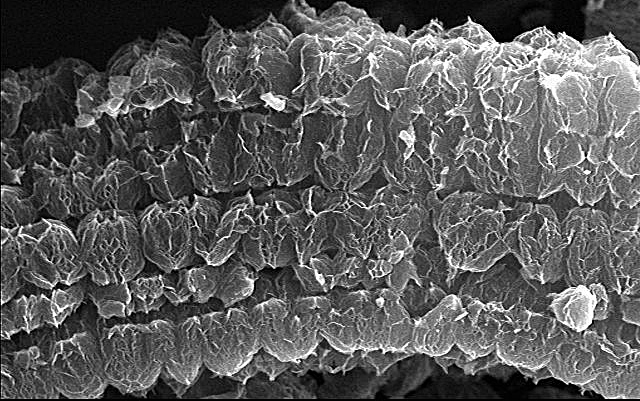
Expandable graphite is created by the intercalation of bisulfate anion between graphene layers. When rapidly heated, the intercalate decomposes, forming gas phases which increase in volume by approximately 1000×. This rapid gas expansion generates sufficient pressure to force graphene layers apart, causing exfoliation parallel to the c- crystallographic axis of the graphite lattice.
The expansion ratio is defined as the volume of exfoliated graphite produced per unit mass of expandable graphite. While expressed as a simple ratio, it reflects a complex interaction of intercalant chemistry, particle size, and heating conditions. Higher expansion ratios correspond to greater volumetric expansion and lower bulk density.
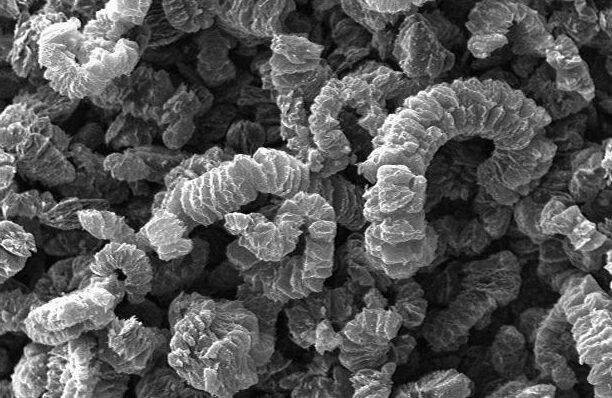
Rapid heating is critical. Slow or ramped heating allows intercalant gases to escape before sufficient pressure builds, reducing or eliminating expansion. Maximum expansion typically occurs at temperatures ≥700°C, with many grades optimized for expansion at 900–1000°C.
Particle size has a direct and measurable impact on expansion behavior:
Smaller particles allow gases to escape more easily from flake edges, preventing pressure buildup. Flake thickness also matters—thicker flakes expand more than thinner flakes. Grinding and size reduction can therefore reduce expansion potential.
Expansion ratios can be precisely controlled by:
This flexibility allows formulators to tailor expansion performance for specific applications.
WHY ASBURY
Asbury Advanced Materials is a global supplier of expandable flake graphite, offering multiple standard grades that vary in particle size, carbon content, pH, and expansion ratio. Custom-engineered expandable graphite products are available to meet precise performance requirements across fire protection, sealing, and conductive applications.

Deep experience across carbon, graphite, and specialty materials—supporting complex, real-world applications.
Knowledgeable teams who understand material behavior, processing requirements, and application constraints.
Reliable materials processed to meet demanding specifications, batch after batch.
A diversified sourcing and distribution network designed to support customers wherever they operate.
Resources

Get Started
When Performance Matters, Material Selection Matters.
Trust the materials experts to supply the right graphite, carbon materials, cokes & coals, coatings, and advanced solutions for your application.